EDITOR'S NOTE — OCTOBER 2026
This article was written by Mrinalini Owen and follows her experiences of training and competing in Rally Obedience with her Samoyed, Svetlana, in 2017.
We have preserved this personal account, including its original competition results and descriptions of the sport at the time. Some rules, scoring requirements and competition procedures may have changed since publication.
For current information and official Rally regulations, please visit The Royal Kennel Club:
https://www.thekennelclub.org.uk/activities/rally/
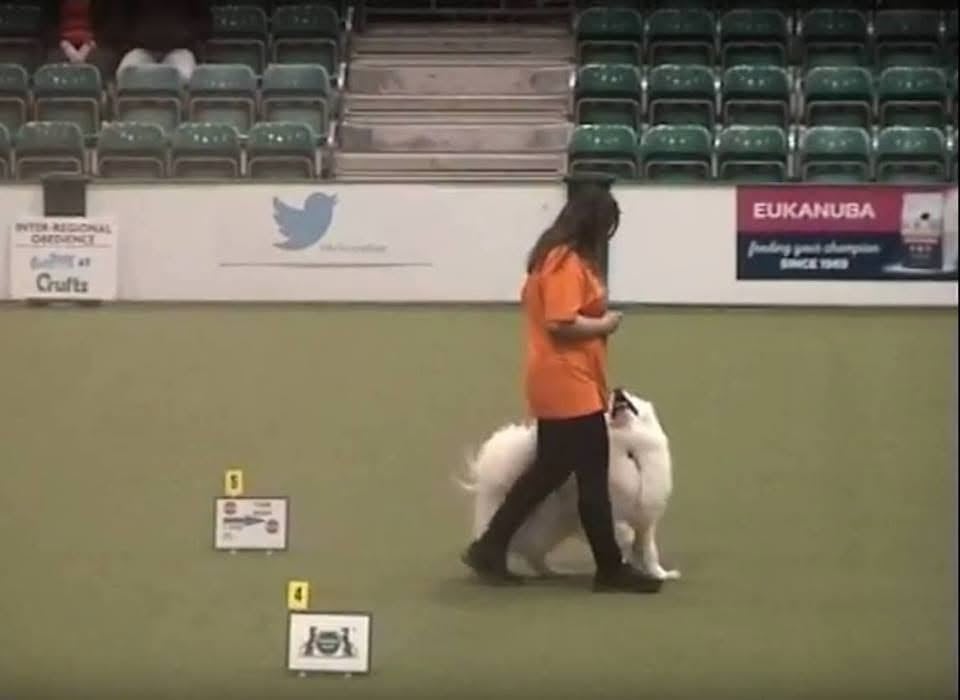
Rally obedience, which is relatively new to the UK, involves the handler and dog negotiating a “round” consisting of about 14 signs, within a duration of 4 minutes. There are 6 progressively advanced levels: of these, 1 and 2 are performed on a loose lead and 3-6 with the dog off lead. Typical signs in Level 1 and 2 would involve placing the dog in a “sit” or “down” while the handler walks around the dog anti-clockwise, or a 360-degree turn to the left or right with the dog in heel position. At Level 3 and upwards, things get more challenging, e.g. signs include weaves round bowls of food, or combinations of signs, or courses set up where it isn’t immediately clear where the next sign is. At Level 6, you will be sending your dog over a hurdle and doing retrieves.
Exercise modifications may be requested for handlers, but not for dogs unfortunately, which may exclude elderly or less able dogs from the send-over-hurdles at Level 6.
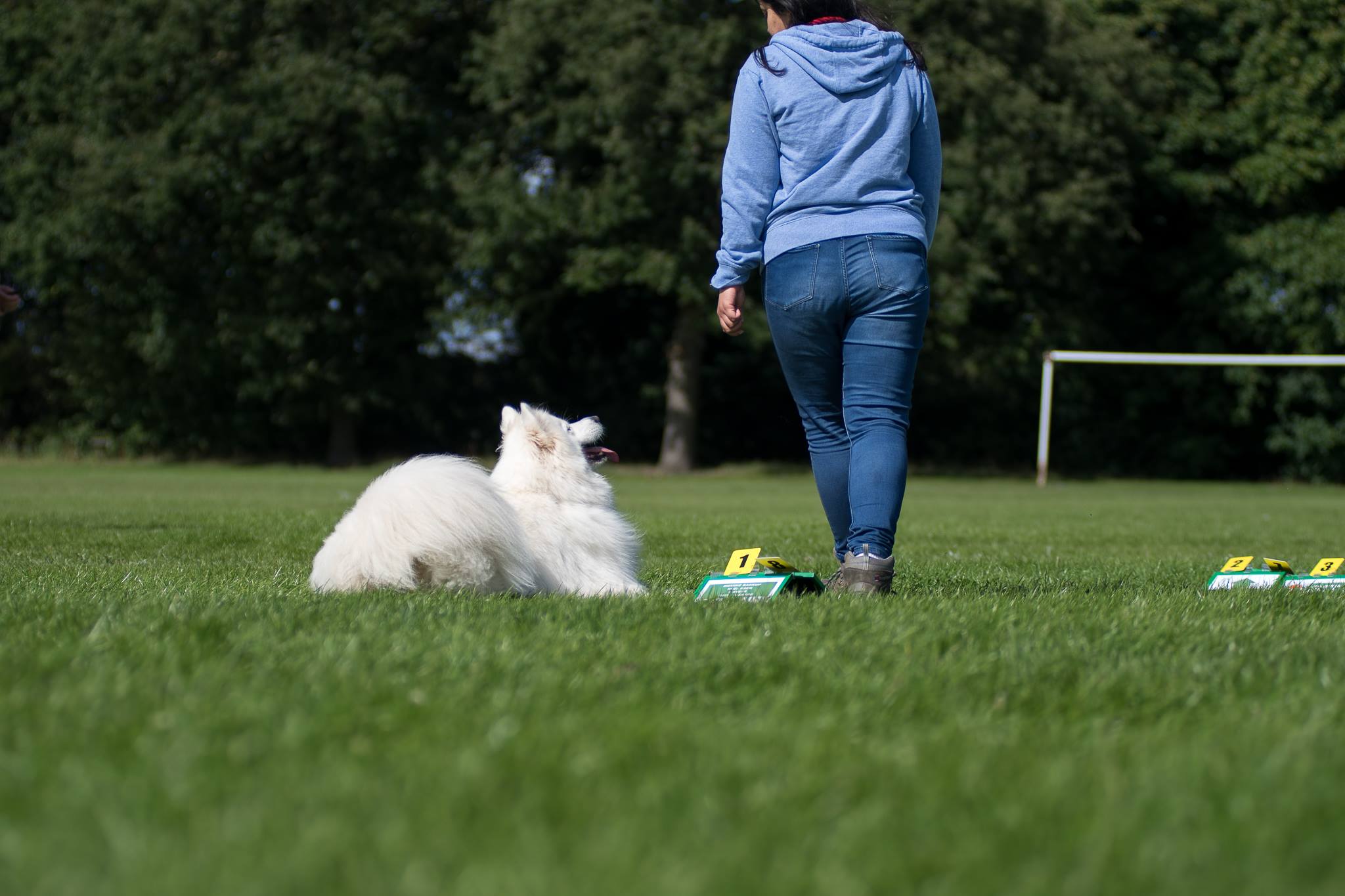
(photo: Michael Hirst)
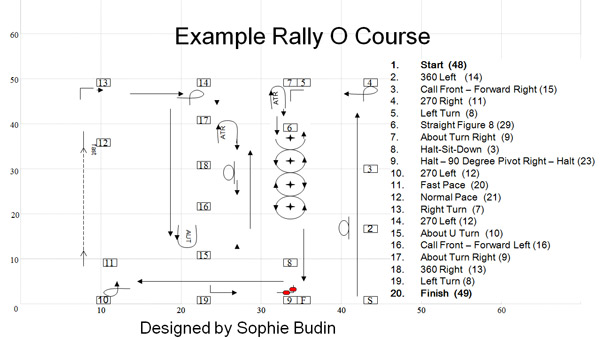
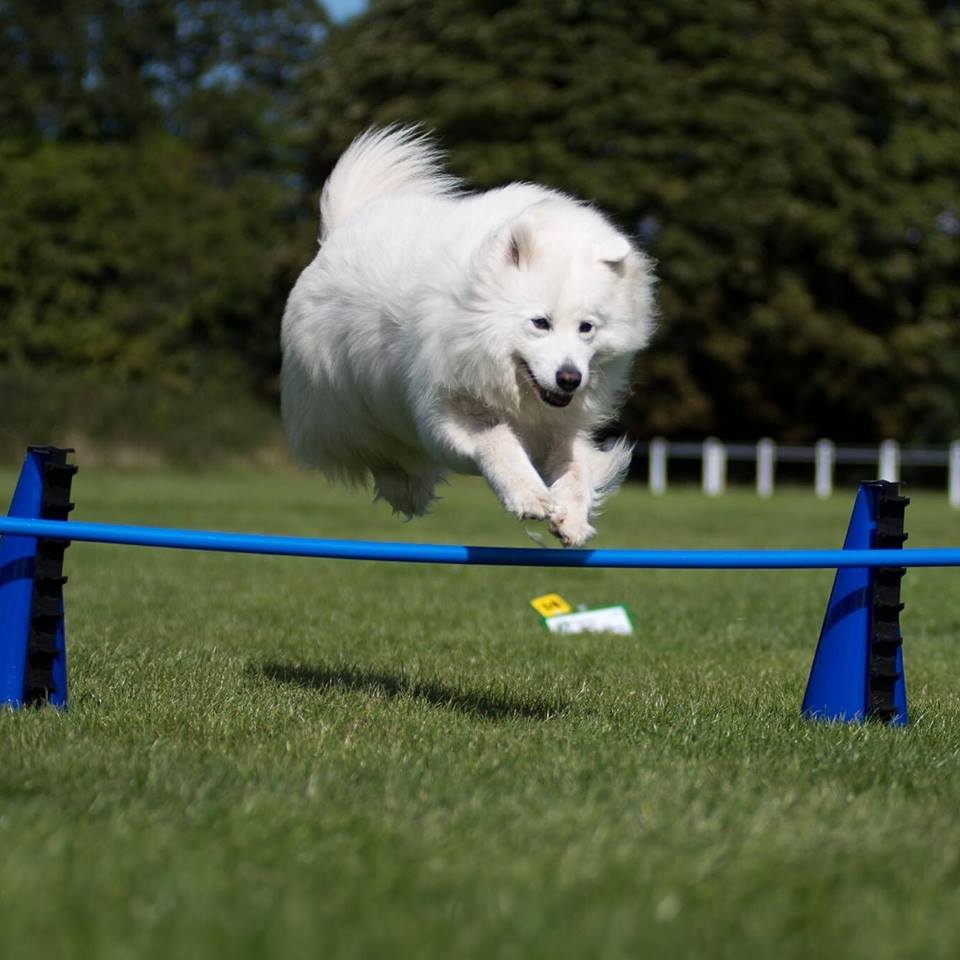
(photo: Michael Hirst)
Handler and dog start the round with a score of 200 points (210 if you opt for the bonus exercise). Points are then deducted for errors, which may include the lead going tight, failing to change pace if the sign calls for a “fast” pace, and so on. Svetlana does vocalise a bit as she goes around (mainly happy “aroos”, but also the odd excited bark). We’ve found that judges have been OK with this at Level 1, but are likely to be stricter at higher levels. Some mistakes lead to a non-qualifying round; e.g. looping round an extra cone when doing a spiral or weave. A “qualifying” round is scored at 170 points or above, while a score of above 190 is an Excellent qualifier. A dog needs 3 qualifying scores at a given level, under different judges, to earn their title for that level. Three “excellent” qualifying scores earn the dog an Excellent title. The title of a dog that has qualified Excellent three times at Level 6 would be “RL6 Ex”.
Beginnings
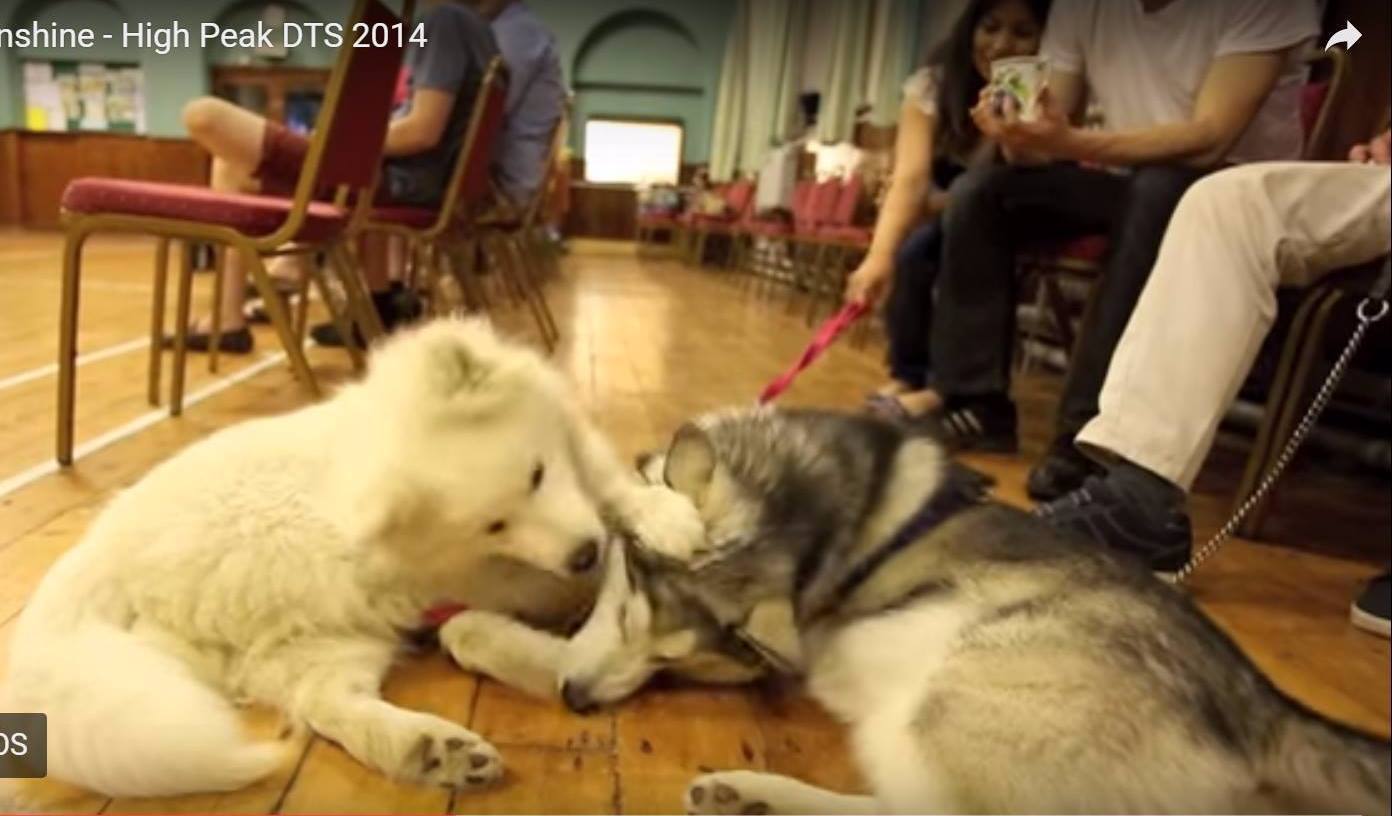
Svetlana and I started “obedience” when she first came to us as an eight-week-old puppy, keeping training sessions under a minute in length and starting with the very basics. She loved ‘working’ with me and quickly learnt that “tricks” got her toys, treats and lots of praise, and “failing” or not showing her an interest never got her a telling off or disapproval.
As first-time Samoyed owners, we took the warnings about the breed’s stubbornness and selective hearing seriously: as soon as she was old enough to get out and about, we enrolled into our local KC Good Citizen training classes. Although very sharp and quick to learn as a pup, Svetlana was typically playful and highly social, preferring a good romp with her puppy friends to paying attention at class, We accepted this with a sense of humour (although sometimes the trainers didn’t!) and persisted. By the age of two, Svetlana had earned her KC Good Citizen Gold award. We were ready to move on to something more challenging, although were not quite sure at the time what this was to be.
Rally Obedience
Rally obedience has proved to be the ideal progression for Svetlana. We started training with the very friendly and welcoming Borderdale Flyers Rally and Competition Obedience Training club in May 2017, a few months after her fourth birthday.
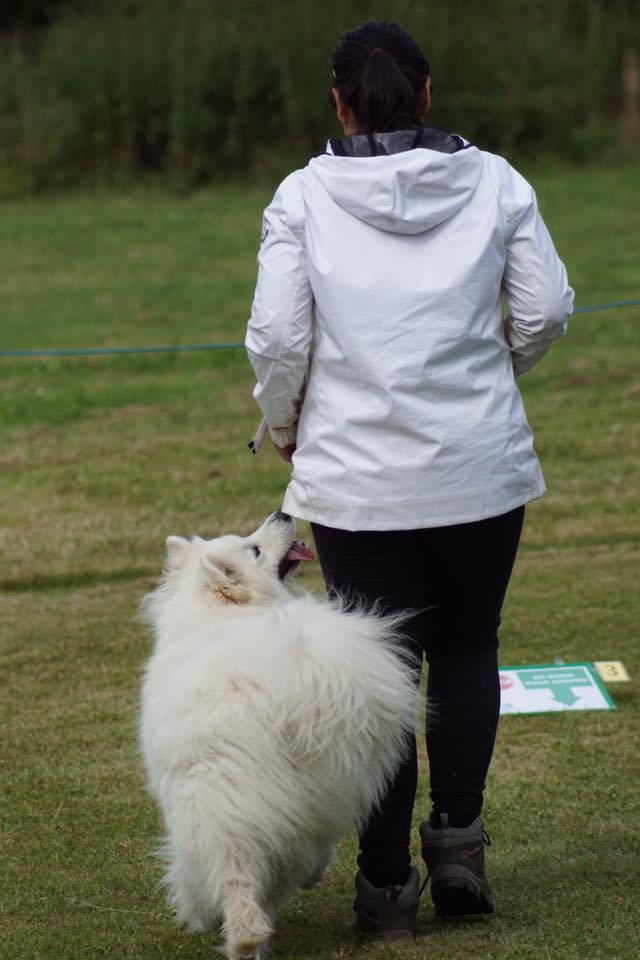
(photo: Diane Rhodes)
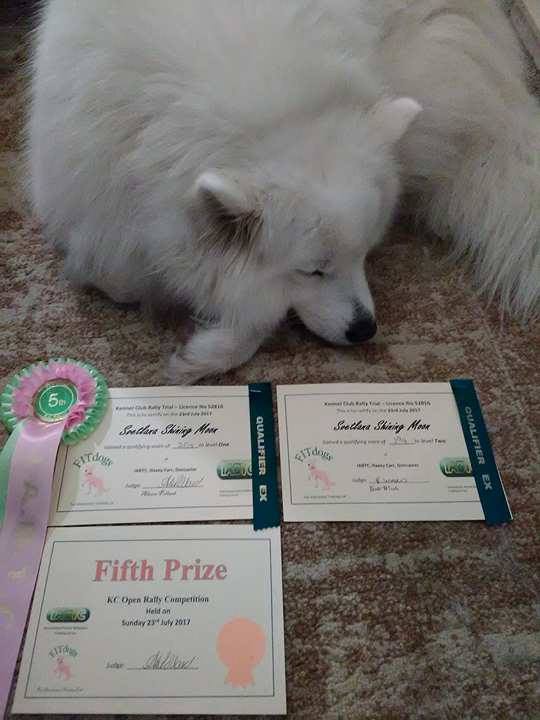
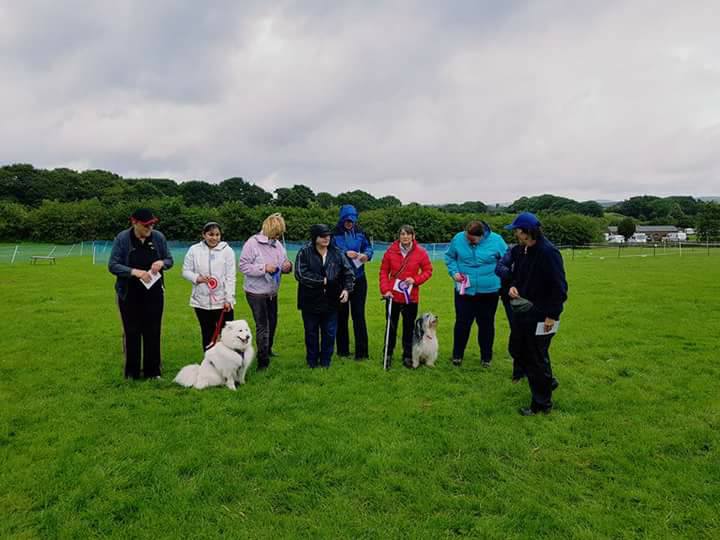
At her first rally obedience show (IABTC Fitdogs KC Rally Open show at Haxey, 23 July 2017), Svetlana scored 204/210 (5th out of about 30 dogs at Level 1), and 194/210 at Level 2 – both Excellent qualifying. At her second rally competition (On Track KC Rally Open Competition in Bury, 19 Aug 2017), she scored 208/210 at Level 1, and was 1st out of 29 dogs. Her third qualifying score will earn her a Level 1 title.
What we really like about rally obedience is that it focuses on the dog & handler relationship rather than the more traditional strict principles of competitive obedience. You are encouraged to talk to, and praise, your dog as you negotiate the course together (some sing to their dogs!), although repeating commands excessively or telling the dog off harshly is penalized. No treats or toys are allowed, and “luring”, i.e. pretending you have a treat, is forbidden. Exercises must be completed on a loose lead with the dog to your left, but not necessarily in the traditional “head-turned-to-the-left” strict heel position. My favourite thing though is that the handler is allowed to walk through the course (without their dog) for 30 minutes before the start of judging (some people draw a diagram of the course and make note of all the signs) to familiarize themselves. Also, you can choose your running order at Levels 1 and 2. This allows you enough time to watch others and mentally prepare yourself and your dog before going in, and ensures that there are no nasty surprises once in the ring (unless your dog toilets in the ring during the round, which will lead to a non-qualifying score!)
(photo: Jayne Elliott)
Resources
I have listed some helpful websites and Facebook groups below. There is a rally obedience display at Crufts, which should make interesting watching. At present, the sport is predictably dominated by Border Collies, Shelties, and German Shepherd dogs but the community is very welcoming to new breeds to the sport. As far as we know, Svetlana is the only Samoyed competing at present, but I do hope to see more of us at Rally in the future.
https://www.facebook.com/groups/rallyonews/
https://www.thekennelclub.org.uk/activities/rally/
Where to enter competitions: https://www.withyourdogrally.co.uk/