Every Sniff Tells a Story
If you live with a Samoyed, you’ll probably be familiar with the moment when an ordinary walk comes to a complete standstill.
Your dog has discovered something fascinating.
You can’t see it. You certainly can’t smell it. But apparently, that particular blade of grass requires a full investigation before anyone is allowed to move on.
Welcome to the wonderful world of a dog’s nose!
Scentwork takes that natural curiosity and turns it into an enjoyable activity that challenges your dog’s mind, builds confidence and strengthens the partnership between dog and owner.
And the best part? Almost any Samoyed can have a go.
What Is Scentwork?
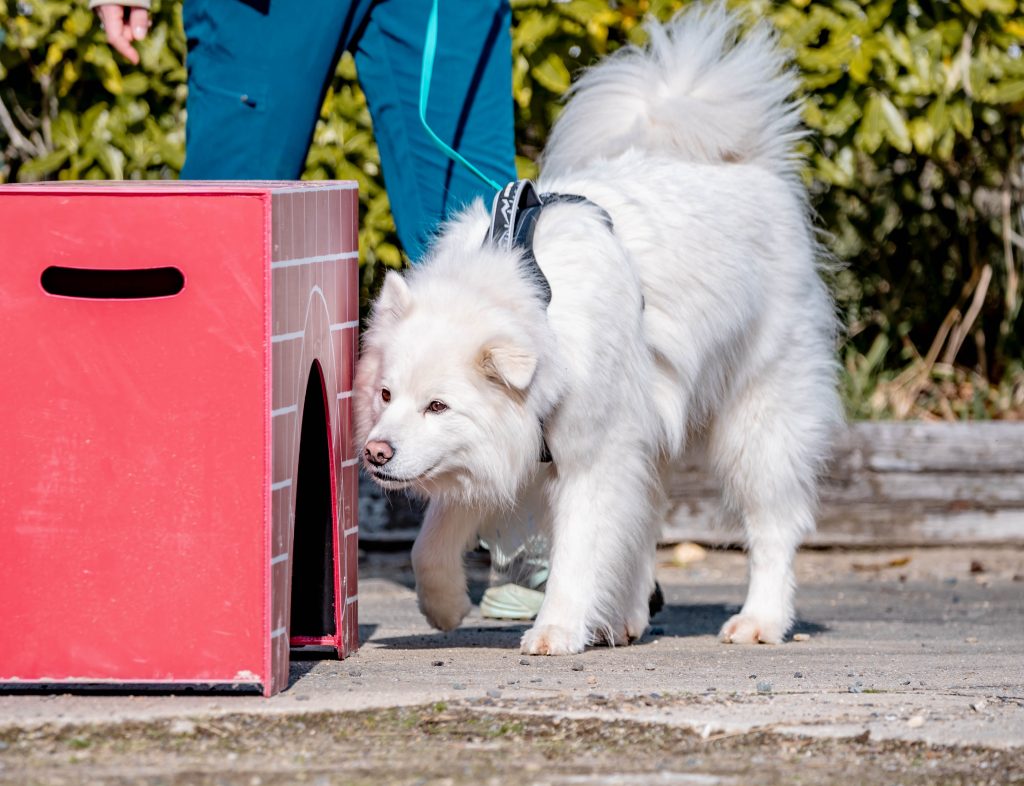
Scentwork is a dog sport in which dogs learn to locate specific odours hidden in different environments.
Instead of following their owner’s instructions at every moment, dogs are encouraged to use their own noses, make decisions and work independently.
The handler’s role is to support the dog, observe its behaviour and recognise when it has located the target scent.
Searches might take place indoors, outdoors, around everyday objects or in specially arranged training areas.
A search can look surprisingly simple from the outside. But for the dog, it involves concentrating on scent information that humans cannot detect.
It’s a wonderful example of just how differently our dogs experience the world.
Why Is Scentwork Great for Samoyeds?
Samoyeds are intelligent, curious dogs who often enjoy having something interesting to do.
Although the breed is traditionally associated with pulling sleds and working in Arctic conditions, there are many ways to keep a Samoyed mentally and physically engaged.
Scentwork offers something a little different.
It doesn’t require your dog to run at speed, jump obstacles or perform complicated obedience routines.
Instead, success comes from using its natural sense of smell.
This makes scentwork an activity worth exploring with dogs of different ages, temperaments and abilities, provided the training and search environment are appropriate for the individual dog.
It can be particularly rewarding for dogs who enjoy investigating their surroundings.
And for the Samoyed who occasionally appears to have selective hearing, it offers a chance to shine without being expected to maintain perfect eye contact with their owner!
How Does It Work?
Dogs are introduced to a particular target odour and taught that finding it leads to a reward.
In UK scentwork training, target scents may include substances such as clove, although the odours used depend on the organisation and training system.
Initially, the scent may be placed somewhere very easy to find.
The dog is rewarded for locating it, helping build a positive association with the search.
As training progresses, the hiding places become more challenging.
The scent might be hidden:
- Inside or beneath suitable objects.
- Around furniture or equipment.
- In an indoor room or hall.
- Along an outdoor search area.
- At different heights, where safe and appropriate.
- In environments containing distracting smells.
Dogs also learn to communicate that they have found the target.
Some naturally pause, focus intensely on the source or look towards their handler. Others may be taught a more specific indication.
Learning to recognise your own dog’s behaviour is one of the most fascinating parts of scentwork.
Learning to Trust Your Dog
One of the biggest surprises for new handlers is discovering how much they need to trust their dog.
In many other activities, we tell our dogs what to do.
In scentwork, the dog often knows something that we don’t.
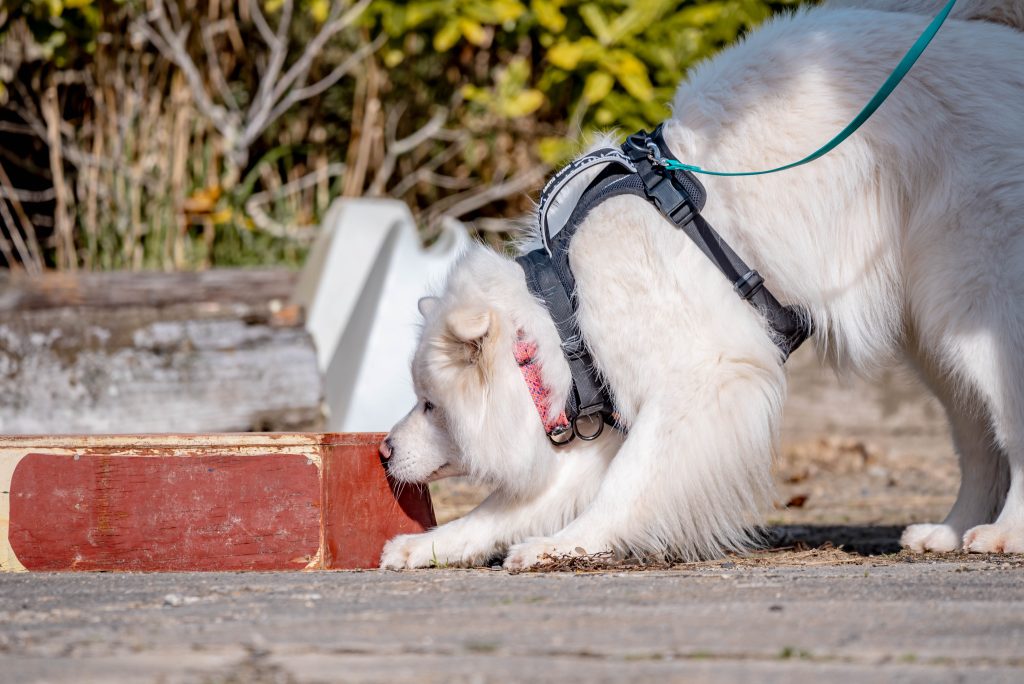
The handler cannot simply look around and identify the correct hiding place. Instead, they must pay attention to the dog’s movements, changes in breathing and searching behaviour.
Sometimes a dog will investigate an area, move away and then return to it.
To us, it may look as though they are wandering around without much purpose.
But the dog could be following a complicated scent trail, working out where the odour is coming from.
It takes patience to learn when to encourage, when to give space and when to let the dog solve the puzzle independently.
That partnership is a large part of what makes scentwork so enjoyable.
Is It Just for Competition Dogs?
Not at all.
Many owners enjoy scentwork purely as a recreational activity.
Training sessions provide mental stimulation and an opportunity to learn something new together.
You can attend classes, join workshops or practise suitable beginner exercises at home once you’ve learned the basics.
For owners who enjoy a competitive challenge, there are also organised scentwork trials across the UK.
Scentwork UK offers a structured progression through 16 levels, beginning with introductory searches and progressing to increasingly challenging tasks.
Competitors work as a dog-and-handler team, locating designated scented articles according to the requirements of their level.
The organisation also provides opportunities to earn qualifications and titles.
Other scentwork organisations and training systems operate in the UK, so it’s worth exploring which format suits you and your dog.
There is no need to compete unless you want to.
For many Samoyeds, the opportunity to search, discover and receive a well-earned reward is exciting enough!
Getting Started
The easiest way to begin is with an experienced scentwork instructor.
A good beginner class will help you understand how to introduce the target odour, reward your dog correctly and avoid accidentally giving misleading signals.
It will also teach you how to recognise your dog’s natural indication when it finds the scent.
Before attending, ask the instructor which scentwork system they use and whether the class is suitable for your dog’s age, confidence and physical needs.
Keep early sessions short, positive and enjoyable.
Avoid using concentrated essential oils or other scent materials without appropriate guidance, as some substances can irritate or harm dogs if handled incorrectly.
Remember that scentwork is mentally demanding. Even a short session can require a great deal of concentration.
Give your Samoyed plenty of breaks and finish while they are still enjoying themselves.
Scentwork at Home
You don’t need to begin with specialist equipment to encourage your dog’s natural searching abilities.
Simple food-search games can be a lovely introduction to using the nose.
For example, you might scatter a few treats in a safe area of the garden or hide a favourite toy somewhere easy to discover.
As your dog gains confidence, you can gradually make the games more interesting.
These activities are not the same as formal target-odour scentwork, but they encourage natural searching behaviour and can be an enjoyable way to provide enrichment.
Always supervise searches and avoid hiding rewards near hazardous objects or in places where your dog might injure themselves.
More Than Just a Good Nose
Perhaps the most rewarding part of scentwork is seeing your dog become completely absorbed in a task.
There is something wonderful about watching a Samoyed confidently work through a problem, make a discovery and proudly announce that the search is over.
It reminds us that our dogs experience the world in ways we can barely imagine.
And sometimes, the best thing we can do is stop giving instructions and let them show us what they can do.
So the next time your Samoyed insists on investigating that apparently fascinating patch of grass, remember — you might just be living with a future scentwork star!
Find Out More
Scentwork UK
Information about training, competitions and scentwork activities in the UK.
Scentwork UK — Qualifications and Rules
https://scentworkuk.com/qualifications-rules/
Details of the different competition levels and progression requirements.
Scentwork UK — Trials
https://scentworkuk.com/scentwork-uk-trials/
Information about upcoming scentwork competitions.
Information reviewed October 2026. Competition rules, target odours and entry requirements can change, so always check the current guidance from the relevant organisation.