
With their unmistakable smile, beautiful white coat and lively personality, Samoyeds are hard to forget. But behind that charming appearance is an intelligent, independent working dog with a fascinating history and a character all its own.
Beautiful, intelligent, affectionate… and occasionally convinced they know better.
Meet the Samoyed
There is something rather special about a Samoyed. Perhaps it is that unmistakable smile, the magnificent coat or the way they seem to approach life with endless enthusiasm.
But anyone who has shared their home with a Samoyed knows there is much more to this breed than a pretty face.
Behind that famous smile is an intelligent, energetic and independent working dog, full of character and often with a rather definite opinion about how things should be done.
Samoyeds can be wonderful companions, but they are certainly not a breed to choose on looks alone.
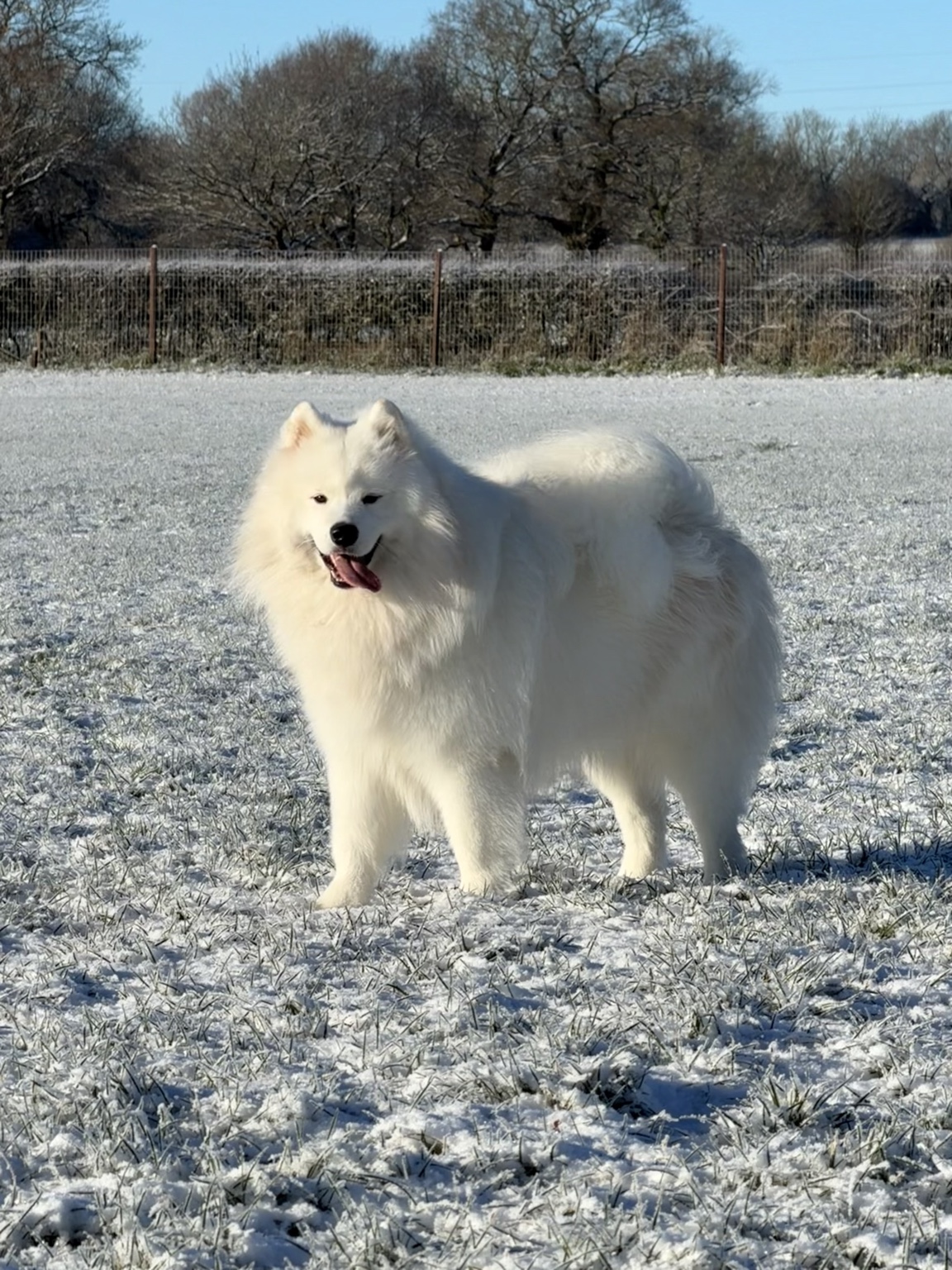
More Than a Pretty White Dog
The Samoyed is a medium-sized, well-balanced dog combining strength, endurance and agility with a graceful appearance.
Its distinctive features include dark, almond-shaped eyes, alert upright ears, a beautifully coated tail and, of course, that famous Sammy smile.
That Famous Sammy Smile
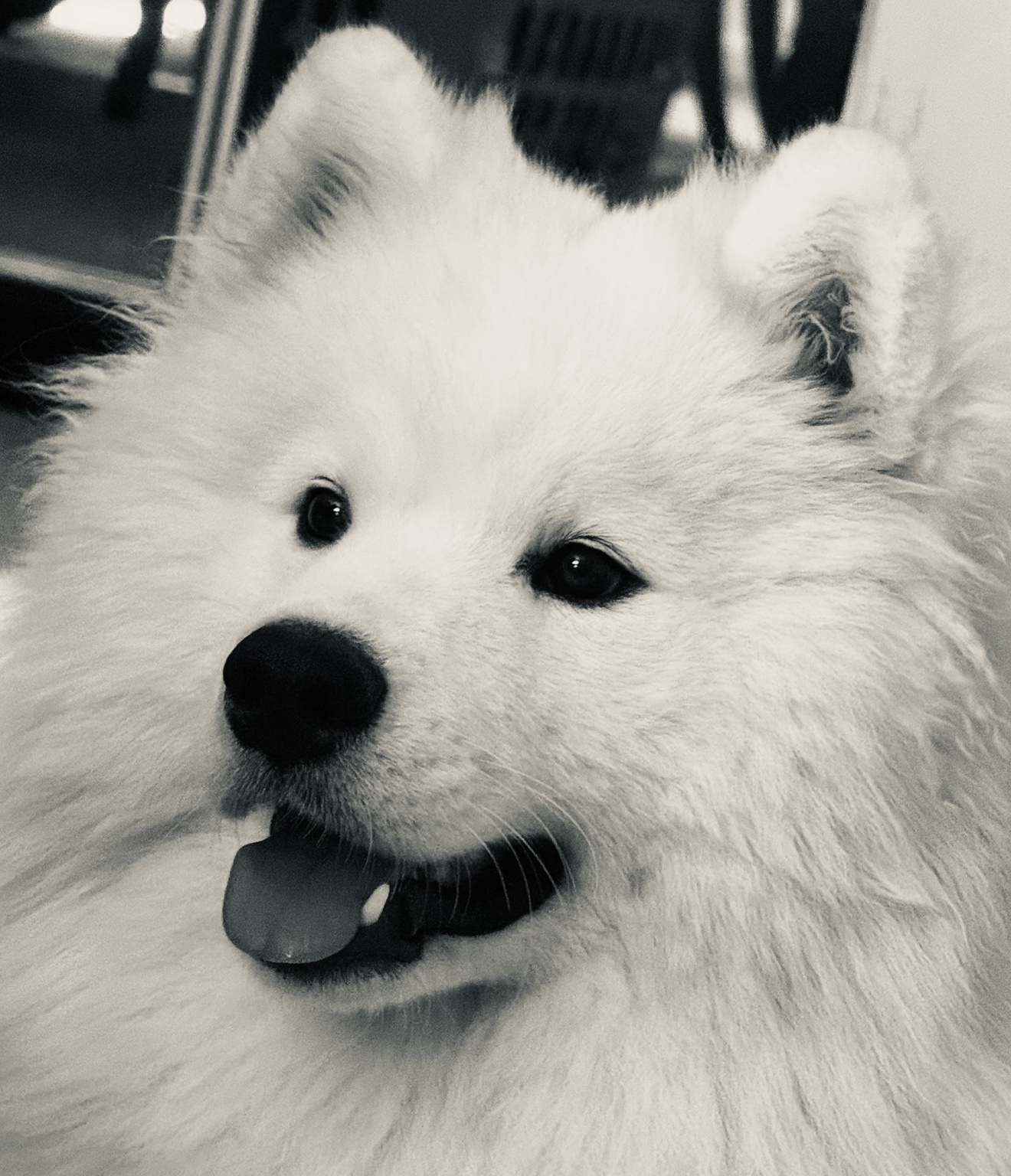
Few breeds have an expression quite as recognisable as the Samoyed. But did you know that the famous Sammy smile is believed to have a practical purpose?
The characteristic upward curve at the corners of the mouth is thought to help reduce drooling — a useful adaptation in the freezing conditions of the breed's Siberian homeland, where moisture around the mouth could turn to ice.
So that irresistible smile may be more than just a charming expression. It is another reminder of the Samoyed's remarkable working heritage.
Of course, it doesn't necessarily mean your Samoyed is agreeing with you. Sometimes they're simply smiling while doing exactly what they please!
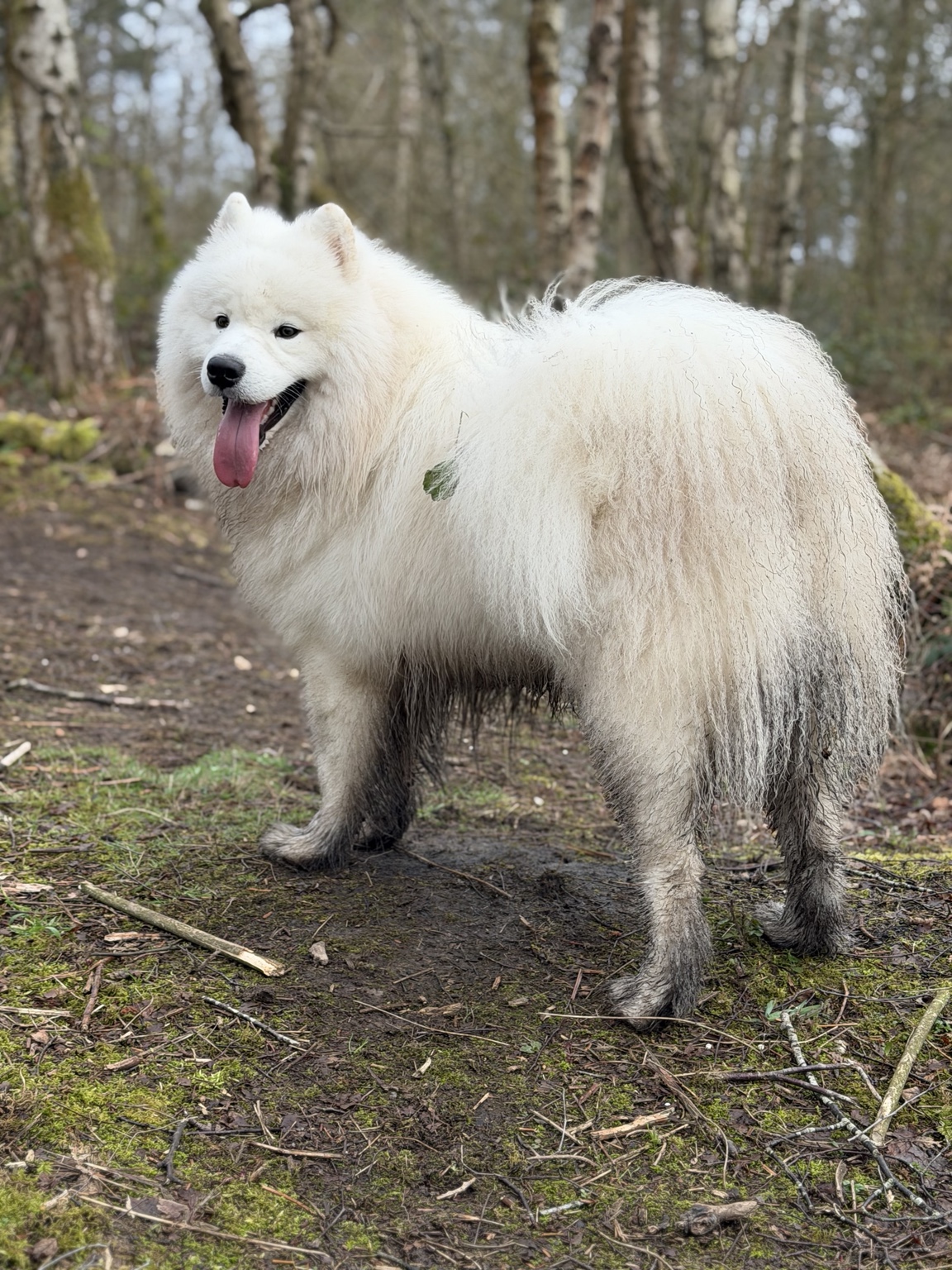
The Coat: Magnificent, Practical and Occasionally Everywhere
The Samoyed's beautiful double coat consists of a soft, dense undercoat beneath longer, harsher outer hairs. Together, they help protect the dog from the extreme cold and harsh weather conditions of its Siberian homeland.
Although often thought of as simply white, the recognised colours include pure white, cream and white with biscuit markings.
And then, of course, there is the shedding.
During a seasonal coat blow, you may occasionally wonder whether your dog has produced enough spare fur to make another Samoyed.
Regular grooming is essential, but with suitable equipment, a sensible routine and a little patience, keeping the coat in good condition is perfectly manageable.
For a detailed description of the breed's appearance, characteristics and temperament, you can read the official Royal Kennel Club Samoyed Breed Standard.
A Working Dog at Heart
The Samoyed's roots lie in northern Siberia, where these dogs lived and worked closely alongside people. Their traditional roles included herding reindeer, helping with transport and sharing everyday life with their human companions.
That heritage is still very much part of the modern breed.
Today's Samoyeds may be more familiar with sofas than snow-covered landscapes, but beneath that beautiful coat is still an active, intelligent dog that enjoys having something to do.
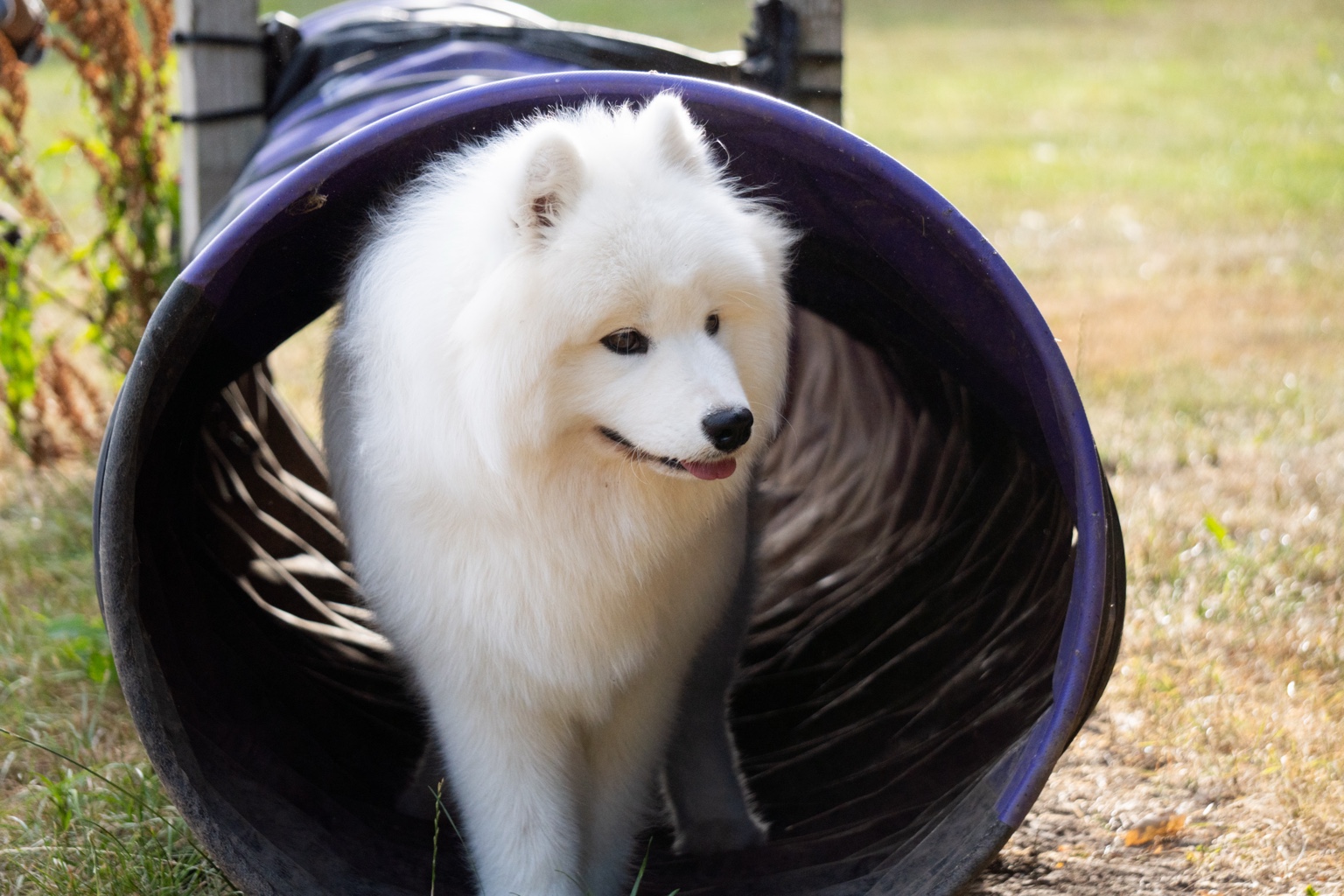
Many Samoyeds enjoy activities such as agility, rally, obedience, scent work and other recreational or working sports. Others are happiest exploring the countryside, learning new skills or simply enjoying an active life with their families.
The important thing is recognising that the Samoyed is not merely a beautiful dog to admire. It is a working breed whose physical and mental needs deserve to be understood.
Discover more about the breed's fascinating past in our Origins & History section.
Living with a Samoyed
Life with a Samoyed Is Never Boring
Living with a Samoyed is a wonderful experience, but it is rarely a quiet one. These beautiful, intelligent and often rather opinionated dogs have a way of becoming involved in absolutely everything their families do.
Whether you are preparing dinner, doing the gardening, sorting the laundry or simply trying to enjoy a cup of tea, there is a good chance your Samoyed will want to supervise.
They are not dogs that are particularly interested in being left out of family life. They want to know what is happening, where everyone is going and, most importantly, whether they are invited.
For many owners, that constant companionship is one of the greatest pleasures of sharing their home with a Samoyed.
A Family Member, Not a Garden Ornament
Samoyeds don't simply like being around their families. They like to be involved in absolutely everything.
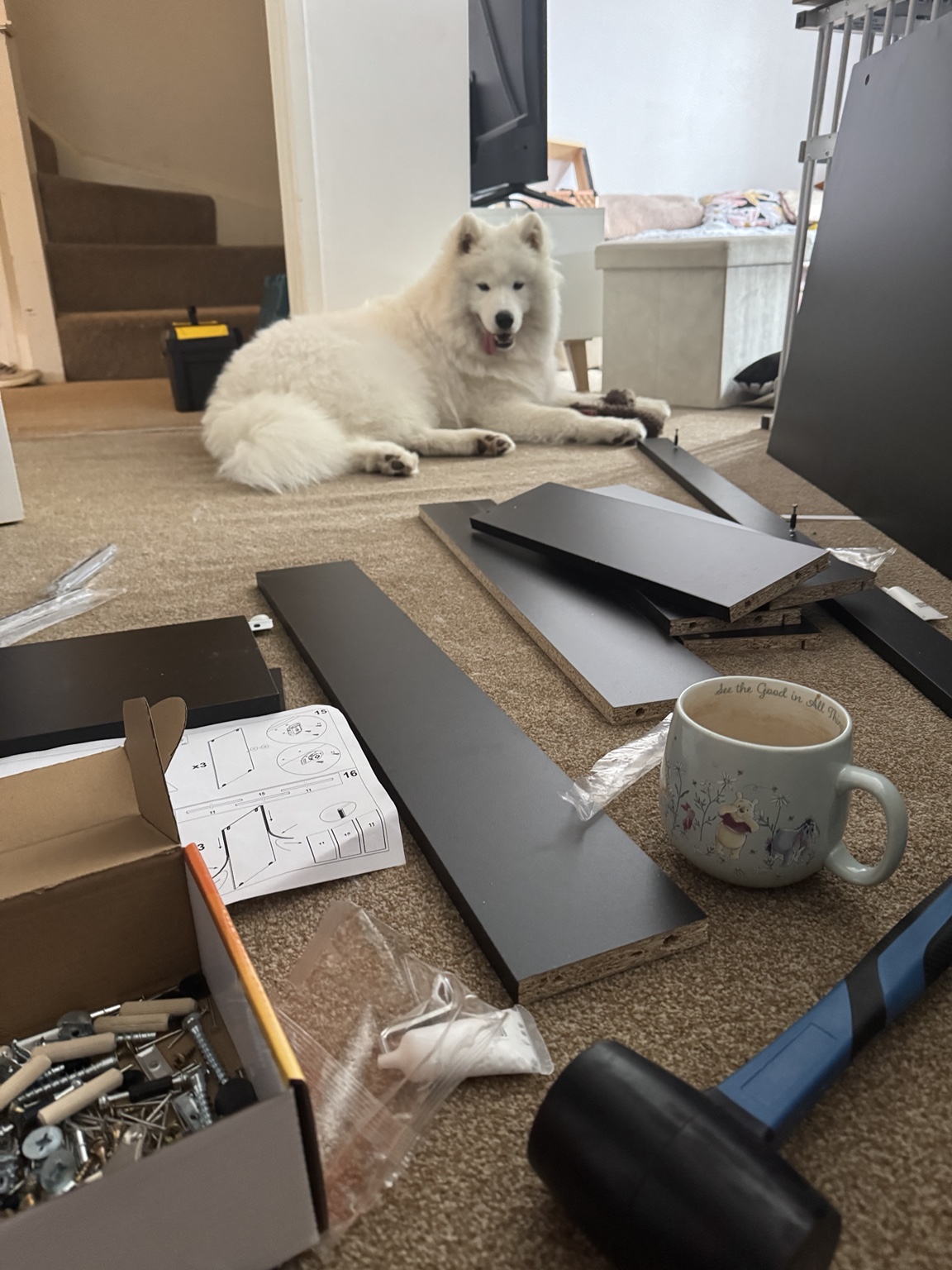
Putting furniture together? Your Samoyed may appoint themselves chief supervisor, preferably sitting right where you need to work.
Fixing the car? Expect a curious nose inspecting the proceedings.
Changing the bedsheets? That can quickly become a full-scale game, complete with a very enthusiastic assistant jumping onto the bed, disappearing underneath the sheets and making sure the job takes twice as long.
It's all part of their wonderful character. Samoyeds are naturally curious, sociable dogs who seem convinced that every household activity is a team effort.
And while their assistance may not always be particularly helpful, life with a Samoyed is rarely dull.
Of course, this desire to be involved also reflects something important about the breed. Samoyeds thrive on companionship and interaction. They want to share your life, not simply watch it from the garden.
Part of the Family
Samoyeds thrive on companionship and generally enjoy being involved in everyday family activities. They often follow their owners from room to room, settle nearby while the family relaxes and enthusiastically welcome everyone home.
Although they can be affectionate and sociable, every Samoyed has an individual personality. Some are enthusiastic cuddlers, while others prefer to show their affection by simply staying close.
Samoyeds can make wonderful family companions, including in homes with children, provided that both dogs and children are taught to interact respectfully. As with any breed, young children should always be supervised around dogs.
They are happiest when they are treated as genuine members of the household, rather than dogs expected to spend most of their lives alone in the garden.
A Clever Dog with Its Own Opinions
Samoyeds are intelligent, observant and quick to learn.
They are also independent thinkers.
A Samoyed may understand exactly what you are asking and still take a moment to consider whether your suggestion is particularly worthwhile.
This is part of the character of a breed developed to work closely with people while also showing initiative.
Training should be consistent, positive and enjoyable. Patience, rewards and a good relationship with your dog are far more productive than harsh handling or endless repetition.
And a sense of humour helps enormously.
Samoyeds can be wonderfully entertaining companions, but they also need guidance, appropriate socialisation and clear, consistent expectations.
Exercise, Adventures and Mental Stimulation
A Samoyed needs more than a quick walk around the block and a comfortable place to sleep.
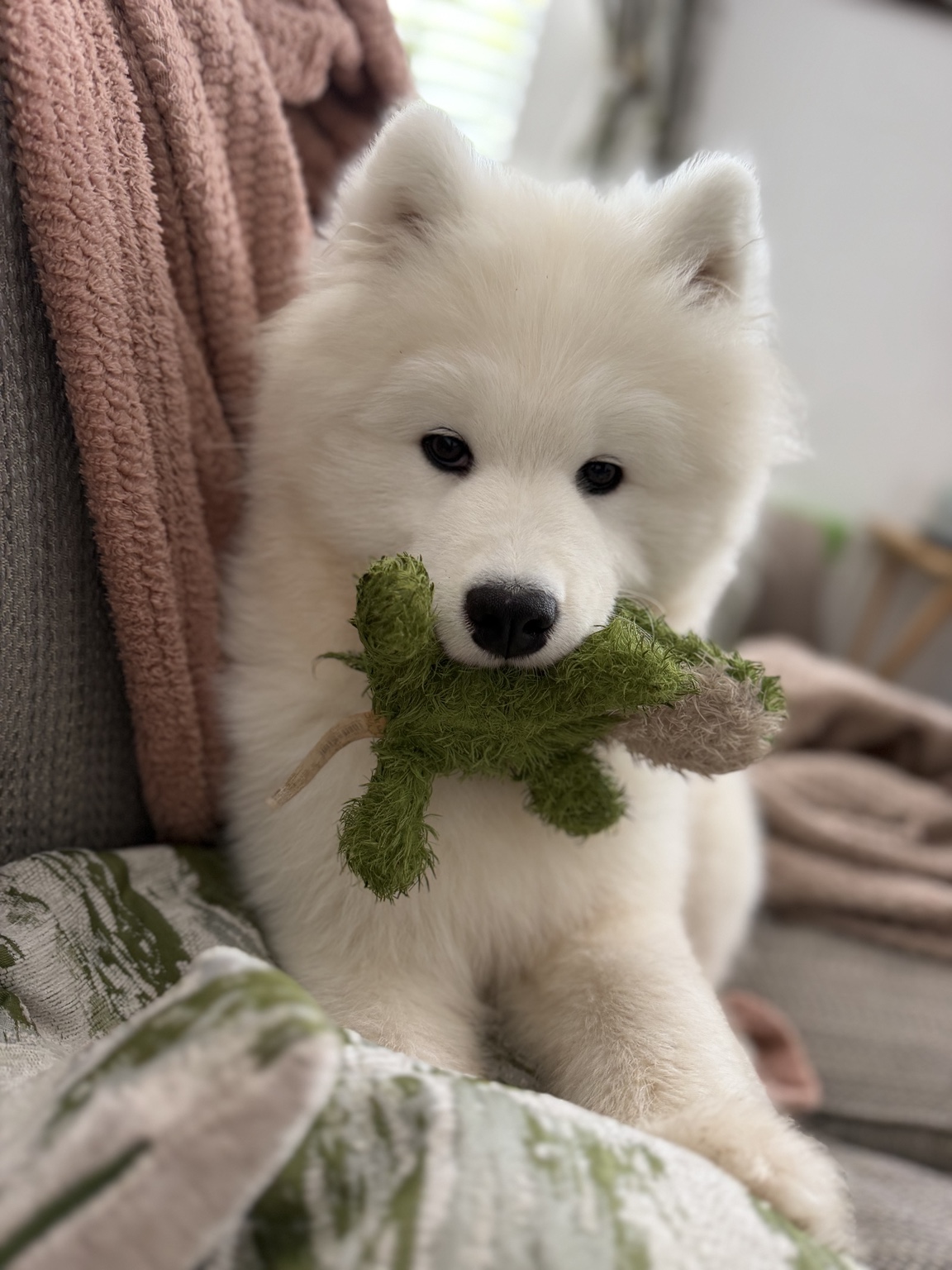
Originally developed as a working breed, Samoyeds enjoy opportunities to explore, move and use their minds. Regular walks, interesting environments, play and suitable activities all help keep them physically and mentally satisfied.
Many enjoy hiking, training games, scent-based activities and dog sports. Others are perfectly happy with a varied routine of walks, play and family adventures.
The amount and type of exercise should always suit the individual dog's age, health and fitness. Puppies need appropriate opportunities to explore and develop without being pushed into strenuous activity, while older dogs may benefit from gentler routines.
For owners interested in exploring organised activities, our Activities & Dog Sports section introduces some of the many things Samoyeds can enjoy.
The Samoyed Voice
One thing many new owners discover quite quickly is that Samoyeds can be wonderfully vocal.
Some bark when excited, some announce visitors, and others appear to have an opinion about almost everything. You may even find yourself having what feels suspiciously like a conversation with your dog.
While a little Samoyed chatter can be entertaining, persistent barking can become a problem, particularly when a dog is bored, frustrated or distressed.
Teaching calm behaviour, providing suitable enrichment and understanding the reason behind the barking are important parts of living happily together.
It is worth remembering that a Samoyed is not necessarily the ideal choice for someone hoping for an exceptionally quiet dog.
The Joys — and Realities — of Living with a Samoyed
The Samoyed is generally known for its friendly, affectionate and playful nature.
Many enjoy meeting people, spending time with their families and joining in whatever is happening around them. Some retain their puppy-like enthusiasm well into adulthood.
But there are a few things prospective owners should know.
Samoyeds can be vocal, and some are particularly enthusiastic about sharing their opinions. They need regular exercise, mental stimulation and plenty of human interaction.
Without suitable outlets for their energy and curiosity, they may develop their own hobbies.
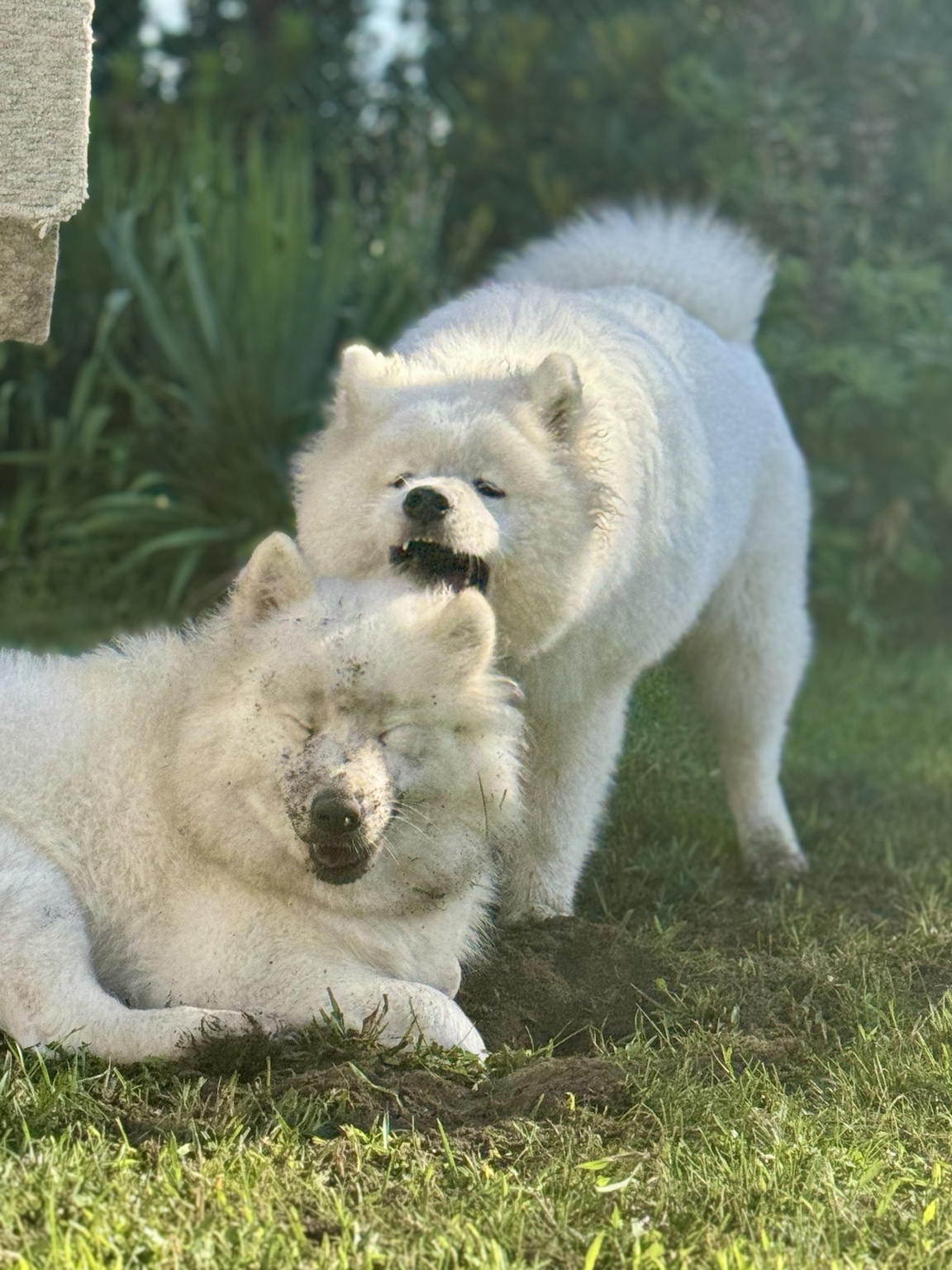
Digging, chewing, barking and creative garden landscaping can all feature on the list.
And yes, that beautiful white coat does sometimes come home looking considerably less white.
These are not reasons to avoid the breed, but they are good reasons to understand it before bringing one home.
Like all dogs, Samoyeds are individuals. Their personalities, confidence and behaviour are influenced by breeding, early experiences, socialisation, training and their environment.
The Garden Is an Adventure Playground
Samoyeds are curious, energetic dogs, and many enjoy digging.
A beautifully maintained flowerbed may look like the perfect gardening achievement to you, but to a Samoyed it can look like an excellent place to investigate what is happening beneath the surface.
Some dig to explore, some to create a cool resting spot, and others simply because digging is enjoyable.
Providing appropriate activities, supervision and, where practical, a designated area for digging can help manage this natural behaviour.
Secure fencing is also important. Samoyeds can be surprisingly determined explorers, and gardens should be checked for gaps, weak points and opportunities to escape.
Sharing Your Home with a White Fluffball
There are a few practical realities that come with living with a Samoyed.
White hairs will become a familiar feature of clothing, furniture and occasionally places where you cannot quite understand how they arrived.
Muddy paws, wet coats and the occasional unexpected indoor zoomies may also become part of daily life.
Their thick double coat requires regular attention, particularly during shedding periods, and owners should be prepared to spend time keeping it in good condition.
Our dedicated Grooming section provides more detailed advice on caring for the Samoyed coat.
Understanding Their Individual Personalities
No two Samoyeds are exactly alike.
One may be confident, outgoing and constantly looking for the next adventure. Another may be quieter, more thoughtful or rather selective about when affection is welcome.
Some love training and learning new things, while others prefer to consider whether your suggestion is worth their time.
Getting to know your individual dog's personality, preferences and needs is one of the most rewarding parts of ownership.
Patience, consistency, kindness and a sense of humour will take you a long way.
Being Left Alone
Samoyeds are sociable dogs, and many find long periods without companionship difficult.
That does not mean they can never learn to spend time alone. It does mean that being comfortable with separation is something that should be developed gradually and positively.
Starting with short, manageable periods, establishing predictable routines and providing suitable enrichment can help a dog learn that being alone is safe.
If a Samoyed shows persistent distress when left, such as prolonged barking, destructive behaviour or panic, it is important to seek appropriate professional advice rather than assuming the dog is simply being naughty.
A Samoyed may not be the most suitable breed for a household where everyone is regularly away for long hours and there is little opportunity for companionship or care during the day.
Is a Samoyed Right for You?
A Samoyed can bring enormous joy to the right household, but living with one requires time, patience and commitment.
Before choosing the breed, consider whether you can provide:
- Regular exercise and opportunities for mental stimulation.
- Consistent, positive training and socialisation.
- Time, attention and companionship.
- Regular grooming and acceptance of seasonal shedding.
- A safe, secure environment for an active and curious dog.
- A long-term commitment to the dog's health and welfare.
A Commitment for Life
Bringing a Samoyed into your home is a long-term commitment involving time, attention, exercise, veterinary care, training and financial responsibility.
Their needs will change as they grow from enthusiastic puppies into adults and eventually senior dogs.
There will be wonderful adventures, funny moments, challenges and perhaps a few household disasters along the way.
But for people who enjoy an active, affectionate and occasionally mischievous companion, life with a Samoyed can be incredibly rewarding.
After all, a house with a Samoyed is rarely completely tidy, rarely completely quiet — and very rarely dull.
The Samoyed's beauty may be what first catches your eye, but it is the personality you will live with every day.
For those who understand and appreciate the breed, a Samoyed can be an affectionate, entertaining and unforgettable companion.
And once you've experienced life with one, a quiet house may never seem quite the same again.